




If you live in Sun City, AZ, managing refrigerant leaks in your HVAC system is essential for maintaining comfort and efficiency. You might notice signs like inconsistent cooling or increased energy bills. Identifying and repairing these leaks can save you time and money. Let’s explore effective techniques that can help you keep your system running smoothly and prevent future issues.
Understanding Refrigerant Leaks and Their Impact
When you notice your air conditioning system struggling to cool your home, it might be due to a refrigerant leak, which can considerably impact your efficiency and comfort.
Refrigerant is essential for absorbing heat from indoors, and without the right amount, your system can’t function properly. This not only leads to warm air blowing from your vents but can also cause increased energy bills as your unit works harder to maintain the desired temperature.
Ignoring a refrigerant leak can lead to more significant issues, including compressor damage, which can be costly to repair.
Additionally, low refrigerant levels can create an environment for moisture buildup, leading to mold growth and potential health risks.
Regular maintenance and prompt attention to any signs of issues can help you avoid these complications. Experienced technicians ensure your HVAC system is assessed and repaired efficiently.
Understanding the impact of refrigerant leaks empowers you to take the necessary steps to keep your home comfortable and your HVAC system running efficiently.
Signs Your HVAC System May Have a Refrigerant Leak
If your HVAC system isn’t heating or cooling your space as it should, a refrigerant leak might be the culprit.
You may also notice ice buildup on the coils, which is another telltale sign of trouble.
Keeping an eye on these issues can help you catch problems early and guarantee your system runs efficiently. Additionally, frequent cycling of the system may indicate underlying issues that need addressing to maintain optimal performance.
Unusual Heating or Cooling
As you rely on your HVAC system for comfort, noticing unusual heating or cooling could signal a refrigerant leak.
If you find that some rooms are warmer while others are colder, it’s a clear sign something’s off. Your system might struggle to reach the set temperature, leaving you feeling uncomfortable.
Additionally, if you hear unusual hissing or bubbling noises, it could indicate refrigerant escaping from a leak.
You might also feel a higher humidity level in your home, as a lack of refrigerant affects your system’s ability to dehumidify.
Don’t ignore these signs; address them promptly to avoid further damage and guarantee your comfort.
Contact a professional for a thorough inspection and necessary repairs.
Ice Buildup on Coils
Unusual heating or cooling patterns can often lead to another concerning issue: ice buildup on your HVAC system’s coils.
If you notice frost forming on the evaporator coils or around the refrigerant lines, it’s a clear sign that something’s wrong. This ice restricts airflow, causing your system to work harder and potentially leading to a refrigerant leak.
You might also experience reduced efficiency, higher energy bills, or even complete system failure. If you see ice, turn off your unit and call a professional immediately.
We offer 24/7 emergency service to address these issues at Mountainside Cooling and Heating. Don’t wait until it worsens; get expert help to restore your HVAC system’s performance and guarantee your home stays comfortable.
Performing a Visual Inspection for Leaks
A thorough visual inspection is vital for identifying refrigerant leaks in your HVAC system. Start by checking the refrigerant lines for any signs of damage or wear. Look for oil spots or discoloration around connections, as these can indicate a leak.
Inspect the evaporator and condenser coils for ice buildup or corrosion, which may also suggest refrigerant loss.
Don’t forget to examine the drain pan and lines for any signs of moisture, which can point to a leak. It’s important to guarantee that the insulation around the refrigerant lines is intact, as damaged insulation can contribute to leaks.
While you’re at it, check the area around your HVAC unit for any unusual sounds or smells, which might signal a problem. Regularly performing this visual inspection can help you catch issues early, preventing costly repairs down the line. Additionally, regular maintenance is crucial to ensure your HVAC system operates efficiently and effectively.
Utilizing Electronic Leak Detectors
Electronic leak detectors offer a reliable solution for locating refrigerant leaks. These devices simplify the detection process, allowing you to pinpoint leaks quickly and accurately. You’ll appreciate their advantages in ensuring your HVAC system runs efficiently. Regular maintenance, including AC coil cleaning, can further enhance system performance and help prevent leaks from developing.
Advantages of Electronic Detectors
While there are various methods for detecting refrigerant leaks, utilizing electronic leak detectors stands out for their precision and efficiency.
These devices offer quick and accurate leak detection, allowing you to pinpoint issues without extensive searching. You won’t have to worry about false positives, as electronic detectors provide reliable readings that guide your repair efforts.
Additionally, they’re user-friendly, making it easy for you or your technician to operate. Many models feature visual and auditory alerts, ensuring you won’t miss a leak.
Plus, electronic detectors can often identify very small leaks that other methods might overlook. By choosing this technology, you enhance your chances of catching leaks early, ultimately saving you time and money on repairs.
Detection Process Explained
Utilizing electronic leak detectors simplifies the detection process, making it straightforward and effective.
These advanced tools can sense even the smallest refrigerant leaks by detecting changes in air composition. When you use one, you’ll start by powering it on and calibrating it according to the manufacturer’s instructions.
Move the detector slowly around potential leak points, such as joints, fittings, and coils. As you do this, pay attention to the audible and visual alerts; they’ll indicate the presence of refrigerant.
Once you identify a leak, mark the area for repairs. This method not only saves time but also helps prevent further damage to your HVAC system, ensuring your home remains comfortable year-round.
Employing Soap Bubble Solutions for Leak Detection
Employing soap bubble solutions for leak detection is a straightforward and effective method to identify refrigerant leaks in HVAC systems.
To get started, you’ll need a mixture of liquid soap and water, which you can easily create at home. Apply this solution to the suspect areas of your system, like joints and connections, using a spray bottle or cloth.
As you apply the soap solution, watch for bubbles to form. If you see bubbles emerging, it indicates that refrigerant is escaping from that spot. This method is not only cost-effective but also non-invasive, allowing you to pinpoint leaks without dismantling any components.
Once you identify a leak, it’s essential to address it promptly to maintain your system’s efficiency and prevent further issues.
Using soap bubble solutions regularly can help you stay proactive in your HVAC maintenance, ensuring your home remains comfortable year-round.
Conducting Pressure Tests on Refrigerant Lines
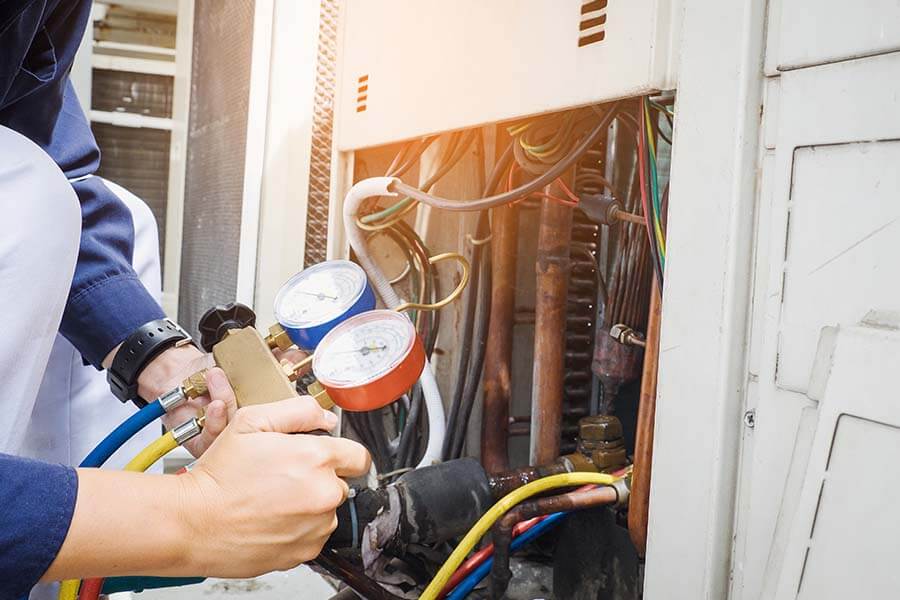
Conducting pressure tests is an important step in HVAC maintenance to identify leaks in refrigerant lines effectively. This process involves pressurizing the refrigerant lines with nitrogen, allowing you to pinpoint any weaknesses or leaks.
First, you’ll need to isolate the section of the system you’re testing. After that, connect a nitrogen tank to the system and gradually increase the pressure to the manufacturer’s recommended level—usually around 150 psi.
Next, monitor the pressure gauge closely for any drops, indicating a potential leak. If you notice a pressure drop, it’s essential to recheck all connections and joints.
Maintaining the correct pressure for a set duration is critical; this helps guarantee the system can handle the refrigerant properly. If leaks are detected, you’ll be better equipped to plan your repair strategy, ensuring your HVAC system runs efficiently and effectively.
Repairing Small Refrigerant Leaks With Epoxy Sealants
When you’re faced with small refrigerant leaks, epoxy sealants can be a quick and effective solution.
You’ll find various types of sealants available, each designed for specific applications.
Understanding the application process is key to ensuring a reliable repair that holds up over time.
Types of Epoxy Sealants
Epoxy sealants are a popular choice for repairing small refrigerant leaks in HVAC systems. They provide a strong, durable bond and can withstand extreme temperatures and pressures, making them ideal for this type of repair.
Here are some common types of epoxy sealants you might consider:
- Two-part Epoxy: Offers excellent adhesion and strength, ideal for metal surfaces.
- Flexible Epoxy: Provides some flexibility after curing, perfect for areas with slight movement.
- Quick-Dry Epoxy: Cures rapidly, great for urgent repairs when time is of the essence.
- High-Temperature Epoxy: Designed to withstand elevated temperatures, suitable for HVAC systems.
Choosing the right type of epoxy sealant can guarantee a reliable and long-lasting repair for your HVAC system.
Application Process Overview
Gathering all necessary materials and tools is essential before starting the application process for repairing small refrigerant leaks with epoxy sealants.
You’ll need the epoxy sealant, a clean cloth, sandpaper, and a brush for application. Start by making sure the area around the leak is clean and dry.
Use sandpaper to roughen the surface slightly; this helps the sealant bond better. Next, mix the epoxy according to the manufacturer’s instructions.
Apply a generous amount over the leak, guaranteeing full coverage. Allow the sealant to cure as recommended—this usually takes several hours.
Finally, check for leaks again after curing to verify the repair is effective. If done correctly, your refrigerant system should be leak-free!
Replacing Damaged Refrigerant Lines
Replacing damaged refrigerant lines is vital for maintaining your HVAC system’s efficiency and preventing further leaks. When you notice issues, it’s important to act quickly to avoid costly repairs down the line.
Here are some key points to take into account:
- Identify the damage: Check for visible wear or corrosion on your refrigerant lines.
- Choose the right materials: Use high-quality, compatible materials to guarantee a proper seal and durability.
- Follow proper installation techniques: Make sure that your new lines are securely attached without kinks or bends that could restrict flow.
- Test for leaks: After installation, always pressure-test the system to confirm there are no remaining leaks.
The Importance of Professional Leak Repair Services
When you suspect a refrigerant leak in your HVAC system, seeking professional repair services is essential to ensuring both your comfort and system efficiency.
Attempting to fix the issue on your own can lead to further damage or improper repairs, which could cost you more in the long run.
Professionals have the right tools and expertise to identify the leak’s source and address it effectively quickly.
Preventative Measures to Avoid Future Refrigerant Leaks
To keep your HVAC system running smoothly and minimize the risk of refrigerant leaks, regular maintenance is key. By taking proactive steps, you can extend the life of your system and prevent costly repairs in the future.
Here are some effective measures you can implement:
- Schedule regular inspections: Have a professional check your HVAC system at least once a year.
- Keep the area around your unit clear: Remove debris, plants, or anything that could obstruct airflow or cause damage.
- Replace filters regularly: Clogged filters can lead to increased pressure and potential leaks.
- Monitor your system’s performance: Keep an eye out for unusual sounds or inefficiencies, and address them promptly.
Taking these preventative measures can help you maintain your HVAC system’s efficiency and avoid refrigerant leaks, keeping your home comfortable year-round.
Conclusion
In Sun City, taking proactive steps to address refrigerant leaks can save you time, money, and discomfort. You can keep your HVAC system running smoothly by understanding the signs and employing effective repair techniques. Remember, a stitch in time saves nine—so don’t wait for small issues to snowball into bigger problems. Regular inspections and maintenance will guarantee your home stays cool and comfortable for years to come. Stay vigilant, and enjoy the peace of mind that comes with a well-maintained system!